
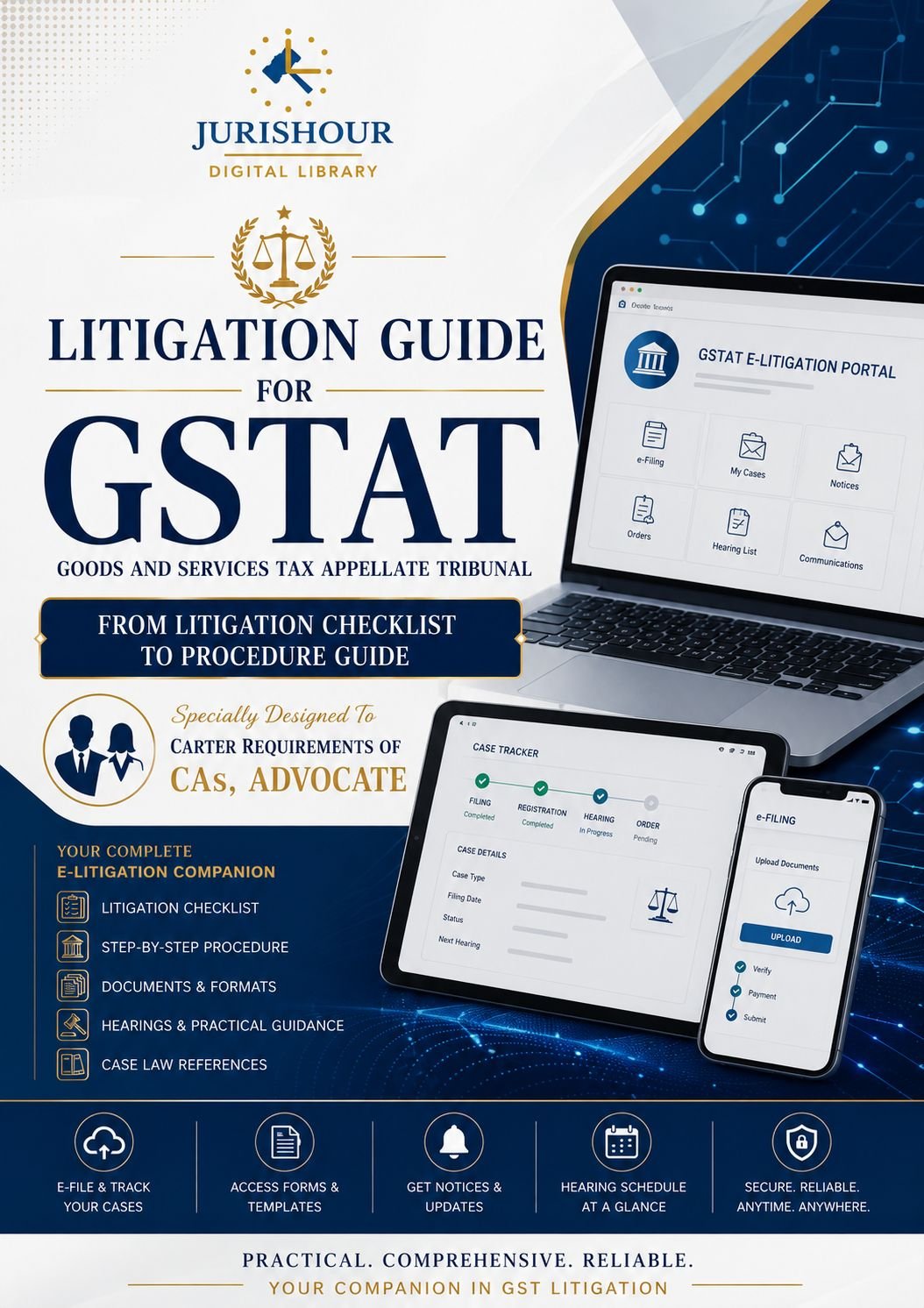
Litigation Guide For GSTAT : From Litigation Checklist To Procedure Guide Specially Designed To Carter Requirements Of CAs, Advocate
Original price was: ₹999.00.₹499.00Current price is: ₹499.00. + GST
Navigate GSTAT litigation with confidence through this comprehensive and practitioner-focused e-magazine designed specifically for Chartered Accountants, Advocates, GST Practitioners, Tax Consultants, and Corporate Tax Teams.
As the Goods and Services Tax Appellate Tribunal (GSTAT) becomes operational, understanding the procedural framework, documentation requirements, statutory timelines, and litigation strategy has become more critical than ever. This publication serves as a practical guide covering the entire GSTAT litigation journey—from evaluating the viability of an appeal and preparing litigation checklists to filing appeals, managing procedural compliances, and representing matters effectively before the Tribunal.
Navigate GSTAT litigation with confidence through this comprehensive and practitioner-focused e-magazine designed specifically for Chartered Accountants, Advocates, GST Practitioners, Tax Consultants, and Corporate Tax Teams.
As the Goods and Services Tax Appellate Tribunal (GSTAT) becomes operational, understanding the procedural framework, documentation requirements, statutory timelines, and litigation strategy has become more critical than ever. This publication serves as a practical guide covering the entire GSTAT litigation journey—from evaluating the viability of an appeal and preparing litigation checklists to filing appeals, managing procedural compliances, and representing matters effectively before the Tribunal.
Written in a simple yet professional manner, the magazine bridges the gap between law and practice by providing actionable guidance on procedural requirements, appeal management, limitation issues, stay applications, evidentiary aspects, and litigation best practices. Whether you are handling GST disputes for clients or managing tax litigation within an organization, this guide offers a structured roadmap to ensure procedural accuracy and effective case preparation.
A must-have resource for every GST professional seeking to stay ahead in the evolving GST litigation landscape.
Index
Chapter 1: Constitutional Foundation of GST Appellate Tribunal (GSTAT)
1.1 Introduction
1.2 Evolution of Tribunal System in India
1.3 Article 323A and Article 323B: Understanding the Difference
Article 323A
Article 323B
1.4 Constitutional Text of Article 323B
1.5 Why Was a Specialized GST Tribunal Necessary?
1.6 Constitutional Philosophy Behind GSTAT
Uniformity
Expertise
Efficiency
Neutrality
Judicial Oversight
1.7 GSTAT as a Quasi-Judicial Institution
1.8 Doctrine of Natural Justice and GSTAT
Audi Alteram Partem
Nemo Judex in Causa Sua
Speaking Orders
1.9 GSTAT as the Final Fact-Finding Authority
1.10 Relationship Between GSTAT and Constitutional Courts
1.11 Judicial Independence of GSTAT
1.12 GSTAT and Cooperative Federalism
1.13 Significance of Principal Bench in Constitutional Scheme
1.14 Conclusion
Chapter 2: Statutory Framework Governing GST Appellate Tribunal (GSTAT)
2.1 Introduction
2.2 Legislative Scheme of GST Appeals
Level 1: Adjudication
Level 2: First Appeal
Level 3: GST Appellate Tribunal
Level 4: High Court
Level 5: Supreme Court
2.3 Important Statutory Provisions Governing GSTAT
2.4 Section 109 – Constitution of GSTAT
Key Features of Section 109
Establishment of GSTAT
Purpose
Bench Structure
2.5 Section 110 – President and Members
Categories of Members
President
Judicial Members
Technical Member (Centre)
Technical Member (State)
2.6 Section 111 – Procedure Before GSTAT
GSTAT is Not Bound by CPC
GSTAT Must Follow Natural Justice
Power to Regulate Procedure
GSTAT (Procedure) Rules, 2025
2.7 Section 112 – Appeals to GSTAT
Appeals by Taxpayer
Limitation
Appeals by Department
Form GST APL-07
Cross Objections
2.8 Section 113 – Orders of GSTAT
Powers During Appeal
2.9 Section 114 – Financial and Administrative Powers
2.10 Section 115 – Interest on Refund of Pre-Deposit
2.11 Section 116 – Appearance Through Authorized Representatives
Advocates
Chartered Accountants
Cost Accountants
Company Secretaries
Regular Employees
Other Authorized Persons
2.12 Appeals Beyond GSTAT
Section 117 – Appeal to High Court
Substantial Question of Law
Limitation
Section 118 – Appeal to Supreme Court
2.13 Section 119 – Recovery During Pendency of Appeal
2.14 Section 120 – Appeal Not to be Filed in Certain Cases
2.15 Section 121 – Non-Appealable Orders
Transfer Orders
Seizure of Documents
Prosecution Sanctions
Installment Orders
2.16 CGST Rules Governing Appeals
Rule 108
Rule 109
Rule 110
Rule 110A
Rule 111
Rule 112
Rule 113
Rule 113A
2.17 GSTAT (Procedure) Rules, 2025
15 Chapters
124 Rules
Dedicated Forms
Digital Filing Mechanism
Hybrid Hearing Framework
2.18 Relationship Between CGST Act and Procedure Rules
Constitution
CGST Act
CGST Rules
GSTAT Procedure Rules
Practice Directions
Administrative Orders
2.19 Importance for Litigation Strategy
Substantive Law
Procedural Law
Tribunal Practice
2.20 Conclusion
Chapter 3: Why GSTAT Was Needed – Historical Background, Legislative Intent and Significance in GST Litigation
3.1 Introduction
3.2 GST Litigation Framework Envisaged by Parliament
Stage 1 – Adjudication
Stage 2 – First Appeal
Stage 3 – Second Appeal
Stage 4 – High Court
Stage 5 – Supreme Court
3.3 The GSTAT Vacuum: A Seven-Year Gap
3.4 Consequences of Non-Availability of GSTAT
Taxpayers Were Forced to Approach High Courts
Article 226
Article 227
Increased Litigation Cost
Delay in Resolution of Disputes
Lack of Uniformity
3.5 Constitutional Challenges Delaying GSTAT
Composition of the Tribunal
Independence of Judicial Members
Appointment Mechanism
Qualification Requirements
3.6 Increasing Complexity of GST Disputes
Input Tax Credit (ITC)
Classification Disputes
Valuation Disputes
Refund Disputes
Place of Supply Disputes
E-Commerce and Digital Economy
3.7 Need for a Specialized Tax Tribunal
Legal Expertise
Technical Expertise
Sectoral Understanding
3.8 GSTAT as the Final Fact-Finding Authority
3.9 Reduction of Burden on High Courts
3.10 Uniform Development of GST Jurisprudence
Consistency
Predictability
National Uniformity
3.11 Importance for Taxpayers
Dedicated Forum
Technical Expertise
Faster Disposal
Reduced Cost
Better Appreciation of Facts
3.12 Importance for the Tax Administration
Consistent Interpretation
Reduced Litigation
Efficient Recovery
Better Resource Allocation
3.13 GSTAT and Ease of Doing Business
3.14 The New Era of GST Litigation
3.15 Conclusion
Chapter 4: Appellate Hierarchy Under GST – A Comprehensive Litigation Roadmap
4.1 Introduction
4.2 Philosophy Behind the Appellate Structure
Correction of Errors
Judicial Scrutiny
Natural Justice
4.3 Stage One: Adjudication Proceedings
Common Adjudication Provisions
Section 73
Section 74
Section 61
Section 62
Section 63
Section 64
Section 129
Section 130
Nature of Adjudication Order
4.4 Stage Two: First Appeal Under Section 107
Authorities Hearing First Appeals
Who Can File?
Taxpayer
Department
Limitation Period
Three Months
Condonation of Delay
One Additional Month
Form for Filing
GST APL-01
Pre-Deposit Requirement
Powers of Appellate Authority
Confirm
Modify
Annul
Remand
4.5 Importance of First Appeal
4.6 Stage Three: Appeal Before GSTAT
Section 112
4.7 Why GSTAT is the Most Important Stage
Final Fact-Finding Authority
Practical Significance
4.8 Limitation for GSTAT Appeals
Three Months
Condonation
Three Additional Months
4.9 Forms for GSTAT Appeals
GST APL-05
GST APL-07
GST APL-06
4.10 Jurisdiction of GSTAT
Orders of Appellate Authority
Orders of Revisional Authority
Anti-Profiteering Matters
Other Notified Categories
4.11 Principal Bench vs State Bench
Principal Bench
Place of Supply Disputes
Anti-Profiteering Matters
OIDAR Disputes
Input Service Distributor Matters
Identical Questions of Law pending before multiple State Benches
State Benches
4.12 Stage Four: Appeal to High Court
Section 117
Scope of High Court Appeal
Substantial Question of Law
Limitation
180 Days
What High Court Normally Does Not Examine
4.13 Appeals from Principal Bench
Appeal does not lie to High Court.
Appeal lies directly to the Supreme Court.
4.14 Stage Five: Appeal to Supreme Court
Appeals Reach Supreme Court Through Two Routes
Route One
Route Two
Limitation
60 Days
4.15 Revisional Proceedings Under Section 108
Revisional Authority
Appeals Against Revisional Orders
4.16 Anti-Profiteering Litigation Path
4.17 Strategic Importance of Each Stage
Adjudication Stage
First Appeal
GSTAT
High Court
Supreme Court
4.18 Common Mistakes in Appellate Litigation
Missing Limitation Deadlines
Weak Documentation
Raising New Facts Too Late
Incorrect Bench Selection
Over-Reliance on Case Laws
4.19 Visual Summary of GST Appellate Hierarchy
Step 1
Step 2
Step 3
Step 4
Step 5
4.20 Conclusion
Chapter 5: What is GSTAT? – Structure, Jurisdiction, Powers and Role in GST Litigation
5.1 Introduction
5.2 Statutory Definition of GSTAT
Section 2(9)
5.3 Why GSTAT is Different from Other Appellate Authorities
5.4 Objectives Behind Establishing GSTAT
Specialized Adjudication
Uniformity in GST Interpretation
Reduction of High Court Burden
Faster Resolution of Disputes
5.5 Nature of GSTAT
Judicial Institutions
Administrative Institutions
5.6 GSTAT as the Final Fact-Finding Authority
GSTAT is the Final Fact-Finding Authority.
5.7 Jurisdiction of GSTAT
Orders of Appellate Authority
Orders of Revisional Authority
Anti-Profiteering Cases
Other Notified Matters
5.8 Constitutional Position of GSTAT
Article 323B
5.9 Composition of GSTAT
Principal Bench
State Benches
5.10 Principal Bench
New Delhi
Importance of Principal Bench
Place of Supply Disputes
Anti-Profiteering Cases
OIDAR Matters
ISD Disputes
Identical Questions of Law Pending Across Multiple States
5.11 State Benches
31 State Benches
Composition of State Bench
5.12 Why Technical Members Are Included
5.13 Jurisdiction of Principal Bench vs State Bench
Matters Heard by Principal Bench
Place of Supply Issues
Anti-Profiteering Proceedings
OIDAR Issues
Input Service Distributor Matters
Identical Questions of Law
Matters Heard by State Benches
5.14 Powers of GSTAT
Confirm Orders
Modify Orders
Set Aside Orders
Annul Orders
Remand Matters
Grant Consequential Relief
Examine Additional Evidence
Pass Interim Directions
Condone Delay
Interpret GST Law
5.15 Procedure Followed by GSTAT
Code of Civil Procedure, 1908
Principles of Natural Justice
GSTAT (Procedure) Rules, 2025
5.16 Digital Nature of GSTAT
Electronic Filing
Electronic Service of Notices
Online Cause Lists
Digital Records
Hybrid Hearings
Virtual Hearings
5.17 Relationship Between GSTAT and High Courts
Adjudicating Authority
First Appellate Authority
GSTAT
High Court
Supreme Court
5.18 Relationship Between GSTAT and Supreme Court
5.19 GSTAT as a Precedent-Generating Institution
5.20 Practical Significance for GST Litigators
Facts Win Cases Before GSTAT
5.21 Conclusion
Chapter 6: Digital Ecosystem of GSTAT – Electronic Filing, E-Proceedings and Technology-Driven Litigation
6.1 Introduction
6.2 Evolution from Physical Litigation to Digital Litigation
Central Excise
Service Tax
VAT
Income Tax
6.3 Legislative Basis for Electronic Functioning
Section 111 of the CGST Act
GST Appellate Tribunal (Procedure) Rules, 2025
6.4 Complete Electronic Filing System
What Can Be Filed Electronically?
Appeals
Cross Objections
Interlocutory Applications
Written Submissions
Additional Evidence Applications
Adjournment Requests
Rejoinders
Affidavits
Miscellaneous Applications
6.5 GST APL-05 and Electronic Appeal Filing
Form GST APL-05
6.6 Electronic Case Registration
Acknowledgment is Generated
6.7 Digital Service of Notices
Electronic Portal
Registered Email
Other Prescribed Electronic Modes
6.8 Electronic Cause Lists
6.9 Digital Court Diary and Case Tracking
Court Diary
Appeal Registers
Provisional Appeal Registers
Interlocutory Application Registers
6.10 Hybrid Hearing Model
Physical Hearings
Virtual Hearings
Advantages of Hybrid Hearings
Reduced Litigation Costs
Increased Accessibility
Faster Disposal
Better Participation
6.11 Virtual Hearings Before GSTAT
6.12 Electronic Record Management
Digital Storage
Digital Retrieval
Electronic Indexing
Secure Archiving
6.13 Digital Paper Books
Index
Synopsis
List of Dates
Impugned Orders
Show Cause Notice
Reply
Supporting Documents
Case Law Compilation
Reconciliation Statements
6.14 Electronic Filing of Additional Evidence
6.15 Electronic Affidavits and Verification
Affidavits
Verification
Certification Requirements
6.16 Electronic Inspection of Records
Inspection of Records
Inspection Applications
Access to Case Files
6.17 Advantages of the Digital GSTAT Model
Speed
Transparency
Accessibility
Cost Efficiency
Record Preservation
Environmental Benefits
6.18 Challenges in Digital Litigation
Technical Glitches
File Size Limitations
Connectivity Issues
Learning Curve
Data Security
6.19 Practical Guidance for GST Litigators
Maintain Digital Folders
Use Proper Naming Conventions
Prepare Searchable PDFs
Create Hyperlinked Paper Books
Maintain Backup Copies
6.20 Future of Digital Litigation Before GSTAT
AI-Assisted Case Management
Smart Search Functions
Digital Evidence Dashboards
Automated Cause Lists
Real-Time Hearing Management Systems
Integrated GST Litigation Analytics
6.21 Conclusion
Chapter 7: Forms, Documents and Filing Architecture Before GSTAT – A Practical Litigation Guide
7.1 Introduction
7.2 Statutory Forms Under GST Law
7.3 GST APL-05 – Appeal Before GSTAT
Purpose
Nature of the Form
Information Typically Required
Appellant Details
Respondent Details
Details of Impugned Order
Amount in Dispute
Relief Sought
7.4 Strategic Importance of Appeal Drafting
Nature of Dispute
Statutory Provisions Involved
Issues Raised
7.5 Place of Supply Declaration – The Most Critical Filing Decision
Place of Supply
Principal Bench Jurisdiction
State Bench Jurisdiction
Why It Is Important
The field becomes non-editable.
What Constitutes Place of Supply Dispute?
Inter-State vs Intra-State Supply
Export of Services
Intermediary Services
Bill-to Ship-to Transactions
Cross-Border Service Transactions
What Does Not Normally Constitute Place of Supply Dispute?
Wrong Head of Credit
Clerical Errors
Return Mismatches
Tax Calculation Errors
7.6 GST APL-06 – Cross Objections
GST APL-06
Purpose
Strategic Value
7.7 GST APL-07 – Departmental Appeals
GST APL-07
Monetary Threshold
GSTAT – ₹20 Lakhs
7.8 Forms Under GSTAT (Procedure) Rules, 2025
7.9 GSTAT Form-01 – Interlocutory Application
Purpose
Early Hearing
Additional Evidence
Rectification
Stay Requests
Consolidation Requests
Adjournment Applications
Importance
7.10 GSTAT Form-02 – Order Sheet
Order Sheet
7.11 GSTAT Form-03 – Inspection Application
Inspection of Records
7.12 GSTAT Form-04 – Memorandum of Appeal
Grounds of Appeal
Facts
Relief Claimed
Legal Issues
7.13 Drafting the Memorandum of Appeal
List of Dates
Brief Facts
Grounds of Challenge
Relief Clause
Verification
7.14 GSTAT Form-05 – Affidavit Certification
7.15 GSTAT Form-06 – Summons
Summons
7.16 GSTAT Form-07 – Witness Deposition
Appellant Witness
Respondent Witness
7.17 GSTAT Form-08 – Certificate of Discharge
7.18 Supporting Documents Required with Appeal
Mandatory Documents
Impugned Order
First Appellate Order
Show Cause Notice
Reply to SCN
Relevant Returns
Payment Proofs
Pre-Deposit Proof
Supporting Documents
Agreements
Invoices
E-Way Bills
Books of Accounts
Reconciliation Statements
CA Certificates
Audit Reports
7.19 Importance of Indexing
Recommended Index Structure
7.20 Digital Paper Book Strategy
Hyperlinked PDF Books
7.21 Common Filing Defects
Missing Documents
Improper Verification
Wrong Bench Selection
Incomplete Annexures
Illegible Documents
Missing Authorization
Defective Vakalatnama
Improper Indexing
7.22 Litigation Checklist Before Filing
7.23 Best Practices for GSTAT Filing
File Early
Use Professional Indexing
Create Hyperlinked Paper Books
Upload Searchable PDFs
Separate Facts from Grounds
Anticipate Registry Objections
7.24 Conclusion
Chapter 8: Limitation, Condonation of Delay and Computation of Time for GSTAT Appeals
8.1 Introduction
8.2 Importance of Limitation in GST Litigation
Finality of Proceedings
Administrative Certainty
Judicial Efficiency
Procedural Discipline
8.3 Statutory Scheme of Limitation Under GST
8.4 Limitation for Appeals Before GSTAT
Section 112 of the CGST Act
Within Three Months
Key Phrase: “Date of Communication”
Date of Communication
8.5 What Constitutes Communication of Order?
GST Portal
Physical Delivery
Download Availability
Practical Rule
8.6 Computation of Limitation Period
Day of Communication Excluded
Last Day Included
Example
10 January
11 January
10 April
8.7 Electronic Communication and Limitation
Portal Uploads
Ignorance of Upload
Best Practice
8.8 Limitation in Case of Revised Orders
Corrigenda
Rectification Orders
Amended Orders
8.9 Condonation of Delay by GSTAT
Statutory Condonation Period
Additional Three Months
Normal Limitation = 3 Months
Additional Condonation = 3 Months
8.10 Meaning of “Sufficient Cause”
Sufficient Cause
Common Grounds Accepted
Serious Illness
Natural Calamities
Technical Glitches
Genuine Communication Failures
Circumstances Beyond Control
8.11 Grounds Generally Not Accepted
“I Forgot”
“I Was Busy”
“My Consultant Was Unavailable”
“I Did Not Check My Email”
“The Matter Was Under Consideration”
8.12 Drafting a Delay Condonation Application
Essential Components
Period of Delay
Chronology
Reasons
Affidavit
Supporting Documents
8.13 Judicial Approach Towards Condonation
Liberal Approach
Strict Approach
8.14 Whether GSTAT Can Condone Delay Beyond Three Months?
No
Practical Impact
Six Months + One Day
8.15 Limitation for Departmental Appeals
8.16 Cross Objections and Limitation
8.17 Impact of Wrong Forum Filing
Can Time Be Excluded?
8.18 Limitation During Portal Downtime
Preserve Screenshots
Record Error Messages
Maintain Technical Evidence
Generate Ticket Numbers
8.19 Impact of Holidays
Public Holiday
Tribunal Holiday
Non-Working Day
8.20 Limitation and Additional Evidence
8.21 Limitation Strategy for GST Practitioners
Step 1
Step 2
Step 3
Step 4
Step 5
Step 6
8.22 Common Limitation Mistakes
Waiting for Certified Copies
Miscalculating Date of Communication
Assuming Delay Will Be Condoned
Ignoring Portal Uploads
Last-Day Filing
8.23 Litigation Checklist for Limitation
8.24 Best Practice: File Early, Not Late
First 45–60 Days
8.25 Conclusion
Chapter 9: Pre-Deposit Requirements Before GSTAT – Statutory Framework, Computation, Practical Issues and Litigation Strategy
9.1 Introduction
9.2 Legislative Intent Behind Pre-Deposit
Discouraging Frivolous Appeals
Protecting Revenue
Encouraging Serious Litigation
Reducing Litigation Volume
9.3 Statutory Provision Governing Pre-Deposit
Section 112 of the CGST Act
9.4 Evolution of Pre-Deposit Under GST
9.5 Components of Pre-Deposit
Admitted Liability
Disputed Liability
Admitted Liability
Disputed Liability
9.6 Pre-Deposit for First Appeal
Pay Entire Admitted Amount
10% of Disputed Tax
9.7 Pre-Deposit for GSTAT Appeal
Additional 10% of the Remaining Disputed Tax
9.8 Total Pre-Deposit Exposure
First Appeal
GSTAT Appeal
Total 20% of disputed tax
9.9 Illustration of Pre-Deposit Computation
Tax Demand
Interest
Penalty
First Appeal
GSTAT Appeal
Total Pre-Deposit
9.10 Whether Interest Is Included in Pre-Deposit Calculation?
Disputed Tax
Interest
Penalty
9.11 Pure Penalty Cases
9.12 Pure Interest Cases
9.13 Whether ITC Disallowance Constitutes Tax Demand?
ITC Denied
9.14 Recovery Protection Through Pre-Deposit
Automatic Stay of Recovery
9.15 Strategic Importance of Pre-Deposit
Case Evaluation
Settlement Considerations
Funding Requirements
9.16 Source of Pre-Deposit Payment
Cash Ledger
Credit Ledger
Electronic Cash Ledger
Electronic Credit Ledger
9.17 Pre-Deposit and Electronic Credit Ledger – Litigation Issues
Whether mandatory pre-deposit can be paid through Electronic Credit Ledger?
9.18 Consequences of Non-Payment of Pre-Deposit
Appeal Treated as Defective
Registry Objections
Non-Registration of Appeal
Dismissal at Threshold
9.19 Refund of Pre-Deposit Upon Success
Section 115 of the CGST Act
Pre-Deposit Becomes Refundable
9.20 Interest on Refund of Pre-Deposit
Interest on Refund
9.21 Pre-Deposit in Departmental Appeals
9.22 Common Practical Issues Before GSTAT
Incorrect Computation
Wrong Head of Payment
Short Payment
Excess Payment
Adjustment of Earlier Deposits
Payments Made During Investigation
Deposits Made During Search Proceedings
Deposits Made Under Protest
9.23 Deposits Made During Investigation
Can such deposits be adjusted towards statutory pre-deposit?
9.24 Best Practices for GST Litigators
Verify Tax Component Separately
Compute Pre-Deposit Independently
Reconcile Earlier Deposits
Preserve Payment Challans
Upload Proof of Payment
Prepare Working Papers
9.25 Illustrative Pre-Deposit Checklist
9.26 Future Litigation Trends
9.27 Conclusion
Chapter 10: Drafting and Filing GST APL-05 Before GSTAT – A Comprehensive Practical Guide
10.1 Introduction
Form GST APL-05
10.2 Legal Basis of GST APL-05
Section 112 of the CGST Act
Form GST APL-05
10.3 Understanding the Objective of GST APL-05
Establishes Jurisdiction
Determines Limitation
Identifies Issues in Dispute
Determines Monetary Stakes
Creates Official Case Record
10.4 Before You Start Drafting
Show Cause Notice
Reply to SCN
Adjudication Order
First Appellate Order
Relevant Returns
Invoices
Agreements
Investigation Records
Audit Reports
Reconciliation Statements
Payment Proofs
Pre-Deposit Challans
10.5 Understanding the First Appellate Order
Order of First Appellate Authority
10.6 Identifying Issues for Appeal
10.7 Step 1: Determining Jurisdiction
Which Bench Has Jurisdiction?
State Bench
Principal Bench
10.8 Place of Supply Question – Most Critical Decision
Place of Supply Issue is Involved
Why?
Principal Bench
State Bench
Practical Risk
Field becomes non-editable.
10.9 Step 2: Limitation Verification
Date of Communication
Last Date for Appeal
Delay Period
Need for Condonation
10.10 Step 3: Pre-Deposit Verification
First Appeal Pre-Deposit
Additional GSTAT Pre-Deposit
Challans
Electronic Ledger Entries
10.11 Step 4: Preparing Appeal Synopsis
Brief Facts
Nature of Dispute
Grounds of Challenge
Relief Sought
Ideal Length
10.12 Step 5: Drafting Statement of Facts
Principles of Good Drafting
Be Chronological
Be Objective
Be Accurate
Avoid Arguments
Common Mistake
10.13 Step 6: Drafting Grounds of Appeal
Golden Rule
Types of Grounds
Jurisdictional Grounds
Natural Justice Grounds
Procedural Grounds
Evidentiary Grounds
Statutory Interpretation Grounds
Constitutional Grounds
10.14 Example of Weak Ground
10.15 Example of Strong Ground
10.16 Step 7: Drafting Relief Clause
Relief Must Be Precise
10.17 Step 8: Preparation of Digital Paper Book
Recommended Structure
Volume I
Volume II
Volume III
Volume IV
10.18 Hyperlinked Paper Books
Easy Navigation
Faster Hearings
Better Judicial Appreciation
Professional Presentation
10.19 Electronic Uploading of Documents
PDF Format
Legibility
File Size
Correct Sequence
Proper Naming
10.20 Recommended File Naming Convention
10.21 Registry Scrutiny
Purpose
Common Registry Objections
Missing Annexures
Missing Authorization
Wrong Bench Selection
Incomplete Verification
Defective Vakalatnama
Illegible Uploads
Missing Challans
Defective Index
10.22 Responding to Registry Defects
Analyse Objection
Rectify Defect
Upload Corrected Documents
Preserve Proof of Compliance
10.23 Additional Evidence Applications
Interlocutory Application
10.24 Common Drafting Mistakes
Copy-Paste Appeals
Excessive Facts
Weak Grounds
Missing Legal Provisions
Overuse of Case Laws
10.25 Practical Advocacy Tips
Read Every Page of Record
Prepare Issue-Wise Notes
Prepare Bench Brief
Anticipate Departmental Arguments
Verify Computations Independently
10.26 GSTAT Filing Checklist
10.27 Model Structure of a GSTAT Appeal
Part I
Part II
Part III
Part IV
Part V
Part VI
Part VII
Part VIII
10.28 The First Impression Principle
10.29 Conclusion
Chapter 11: Drafting Grounds of Appeal Before GSTAT – Art, Strategy, Structure and Advanced Advocacy Techniques
11.1 Introduction
11.2 What Are Grounds of Appeal?
Why is the order wrong?
11.3 Purpose of Grounds of Appeal
Define Scope of Litigation
Identify Errors
Preserve Legal Rights
Assist the Tribunal
11.4 Relationship Between Facts and Grounds
Facts
Grounds
Illustration
Fact
Ground
11.5 Characteristics of Good Grounds of Appeal
Precise
Specific
Independent
Legally Sustainable
Factually Supported
11.6 Characteristics of Poor Grounds
Generalized Allegations
Excessive Length
Mixing Facts and Arguments
Emotional Language
Repetition
11.7 Golden Rule of Drafting
One Ground = One Error
11.8 Types of Grounds Before GSTAT
11.9 Jurisdictional Grounds
Lack of Authority
Territorial Jurisdiction
Absence of Statutory Power
Sample Ground
11.10 Natural Justice Grounds
No Opportunity of Hearing
Non-Supply of Documents
Reliance on Third-Party Material
Rejection Without Consideration
Sample Ground
11.11 Grounds Relating to Non-Speaking Orders
Sample Ground
11.12 Statutory Interpretation Grounds
Section 16
Section 17(5)
Section 54
Section 74
Sample Ground
11.13 Grounds Relating to Input Tax Credit (ITC)
Supplier Default
GSTR-2A Mismatch
Procedural Defects
Blocked Credit Issues
11.14 Grounds Relating to Refunds
Export of Services
Inverted Duty Structure
Accumulated Credit
Limitation Errors
Sample Ground
11.15 Grounds Relating to Classification
Sample Ground
11.16 Grounds Relating to Valuation
Sample Ground
11.17 Grounds Relating to Place of Supply
Sample Ground
11.18 Grounds Relating to Penalties
Sample Ground
11.19 Grounds Relating to Interest
Sample Ground
11.20 Alternative Grounds
Example
11.21 Without Prejudice Grounds
“Without Prejudice”
Example
11.22 Additional Grounds
11.23 Drafting Grounds for Remand Matters
Inadequate Examination
Non-Consideration of Evidence
Natural Justice Violations
Need for Factual Verification
11.24 Common Drafting Mistakes
Copy-Pasting From Other Appeals
Excessive Grounds
Repetition
Over-Argumentative Grounds
Failure to Challenge Findings
11.25 Suggested Structure of Grounds
Ground No. 1
Ground No. 2
Ground No. 3
Ground No. 4
Ground No. 5
Ground No. 6
Ground No. 7
Ground No. 8
11.26 Litigation Strategy While Drafting Grounds
Which finding hurts me most?
Which finding is easiest to overturn?
Which issue offers complete relief?
Which issue can result in remand?
Which issue is strongest legally?
11.27 The Art of Persuasive Drafting
What went wrong?
Why is it wrong?
What relief should be granted?
11.28 Checklist for Drafting Grounds of Appeal
11.29 Conclusion
Chapter 12: Paper Books, Documentary Evidence and Additional Evidence Before GSTAT – Building the Foundation of a Winning Appeal
12.1 Introduction
12.2 Importance of Documentary Evidence in GST Litigation
Tax Invoices
Contracts
Purchase Orders
E-Way Bills
GST Returns
Bank Statements
Reconciliation Statements
Books of Accounts
Electronic Records
Correspondence
Audit Reports
12.3 Why Evidence Matters More Before GSTAT Than Before High Courts
Questions of Law
Facts
Evidence
Documentation
Accounting Records
Transactional Reality
12.4 What Is a Paper Book?
12.5 Objectives of a Good Paper Book
Tell the Story
Support Every Assertion
Facilitate Easy Navigation
Create Credibility
12.6 Types of Paper Books
Core Paper Book
Evidence Paper Book
Case Law Compilation
Statutory Compilation
12.7 Recommended Structure of Paper Book
Volume I – Appeal Documents
Index
Synopsis
List of Dates
Appeal Memo
Grounds of Appeal
Relief Clause
Volume II – Proceedings Record
Show Cause Notice
Reply to SCN
Adjudication Order
First Appellate Order
Personal Hearing Submissions
Volume III – Documentary Evidence
Invoices
Agreements
Purchase Orders
E-Way Bills
GST Returns
Payment Records
Volume IV – Reconciliation Records
ITC Reconciliation
Turnover Reconciliation
GSTR-1 vs GSTR-3B Reconciliation
Financial Statements
Volume V – Case Law Compilation
12.8 Indexing – The Most Underrated Skill
Detailed Index
Hyperlinked Index
Hyperlinked PDFs
12.9 Principle of Burden of Proof
ITC Claim
Exemption Claim
Fraud Allegation
Suppression
12.10 Documentary Evidence in ITC Cases
Tax Invoices
E-Way Bills
Goods Receipt Notes
Transportation Records
Payment Proofs
Supplier Returns
Books of Accounts
Stock Registers
Objective
12.11 Documentary Evidence in Refund Cases
Shipping Bills
Export Invoices
Foreign Inward Remittance Certificates
LUT/Bond
GSTR-1
GSTR-3B
Refund Computation Sheets
12.12 Documentary Evidence in Classification Disputes
Product Literature
Technical Specifications
Catalogues
Manufacturing Process Notes
Expert Opinions
Industry Practice Documents
HSN Explanatory Notes
12.13 Documentary Evidence in Valuation Cases
Agreements
Price Lists
Discount Policies
Related Party Agreements
Cost Records
Financial Statements
12.14 Electronic Records as Evidence
Emails
ERP Reports
GST Portal Data
Electronic Ledgers
E-Way Bill Data
Digital Contracts
Accounting Software Records
Legal Recognition
12.15 Affidavit Evidence
Explain Facts
Clarify Circumstances
Support Applications
Verify Additional Evidence
Importance
12.16 Additional Evidence Before GSTAT
Additional Evidence
12.17 Why Additional Evidence Becomes Necessary
Document Not Available Earlier
Document Discovered Later
Wrong Rejection by Authority
Genuine Inability to Produce
Natural Justice Violations
12.18 Admission of Additional Evidence
Evidence is Relevant
Evidence is Material
Evidence Could Not Reasonably Be Produced Earlier
Interests of Justice Require Admission
12.19 Additional Evidence Application
Contents of Application
Description of Evidence
Relevance
Reason for Non-Production Earlier
Prejudice Caused if Rejected
Supporting Affidavit
12.20 Strategic Use of Additional Evidence
Ambush Tactics
Surprise Documents
Last-Minute Filing
12.21 Witness Evidence Before GSTAT
Alleged Bogus Transactions
Fake Invoice Cases
Fraud Cases
Valuation Disputes
Agency Relationship Disputes
12.22 Summoning Witnesses
Summon Witnesses
Call for Documents
Require Production of Records
12.23 Cross-Examination
12.24 Evidentiary Value of Statements Recorded During Investigation
Search
Inspection
Investigation
Summons Proceedings
12.25 Reconciliation Statements – The Most Important GST Evidence
GSTR-1 vs GSTR-3B
Books vs Returns
ITC vs GSTR-2A
Financial Statements vs GST Returns
12.26 Practical Tips for Preparing Reconciliations
Use Clear Formats
Explain Variances
Link Supporting Documents
Provide Working Papers
Avoid Unexplained Differences
12.27 Common Evidentiary Mistakes
Missing Documents
Unindexed Records
Illegible Copies
Unsupported Assertions
Incomplete Reconciliations
Contradictory Records
Late Production of Evidence
12.28 Digital Evidence Management
Electronic Case Folder
Naming Convention
12.29 Evidentiary Checklist Before Hearing
12.30 The Litigation Principle: Documents Win Cases
Strong Facts
Strong Documentation
Strong Reconciliations
Strong Presentation
12.31 Conclusion
Chapter 13: Hearings Before GSTAT – Oral Advocacy, Virtual Hearings, Bench Etiquette, Written Submissions, Cross-Examination and Final Arguments
13.1 Introduction
13.2 Importance of Hearings Before GSTAT
Key Facts
Important Documents
Legal Errors
Procedural Violations
Relief Sought
13.3 Objectives of Oral Advocacy
Simplify
Clarify
Persuade
Assist
13.4 Understanding the Tribunal’s Perspective
What is the dispute?
What is the amount involved?
What findings are challenged?
Which findings are admitted?
What relief is sought?
Which documents support the case?
13.5 Preparation Before Hearing
Master the Facts
Master the Record
Master the Law
Anticipate Questions
13.6 The First Five Minutes Rule
The first five minutes often shape the hearing.
Example
13.7 Opening the Case
Nature of Dispute
Amount Involved
Core Legal Issue
Relief Sought
13.8 Structuring Oral Arguments
Part 1
Part 2
Part 3
Part 4
Part 5
Part 6
13.9 How to Present Facts
Short
Accurate
Chronological
Document-Supported
13.10 Use of Paper Book During Hearing
13.11 Advocacy Before a Fact-Finding Tribunal
Facts Matter More Than Rhetoric
13.12 Handling Questions from the Bench
Listen Carefully
Answer Directly
Avoid Evasion
Admit Weaknesses Honestly
Bad Response
Better Response
13.13 Dealing with Weak Facts
Acknowledge
Explain
Contextualize
Redirect to Stronger Issues
13.14 Use of Judicial Precedents
Effective Approach
Facts of Case
Legal Principle
Applicability to Present Matter
13.15 Written Submissions
Hearing Notes
Legal Briefs
Reference Material
13.16 Ideal Structure of Written Submissions
Brief Facts
Issues Involved
Statutory Provisions
Arguments
Case Law
Relief Sought
13.17 Length of Written Submissions
Excessive Length
Be Precise
Be Organized
Be Focused
13.18 Virtual Hearings Before GSTAT
Hybrid Hearings
Virtual Hearings
Video Conferencing
13.19 Preparing for Virtual Hearings
Test Internet Connection
Test Audio
Test Video
Keep Documents Ready
Log In Early
13.20 Virtual Hearing Etiquette
Use Professional Background
Maintain Eye Contact
Mute When Not Speaking
Avoid Interruptions
Keep Documents Accessible
13.21 Bench Etiquette
Always
Be Respectful
Be Polite
Be Concise
Be Prepared
Avoid
Interrupting the Bench
Arguing with Members
Personal Allegations
Emotional Outbursts
13.22 Departmental Representatives
Authorized Representatives
Departmental Officers
Standing Counsel
13.23 Rejoinder Arguments
Purpose
Clarify Misstatements
Address New Arguments
Highlight Contradictions
13.24 Additional Evidence During Hearing
Seek Leave of Tribunal
13.25 Cross-Examination Before GSTAT
Fake Invoice Cases
Bogus Transactions
Third-Party Statements
Fraud Allegations
13.26 Importance of Cross-Examination
Testing Credibility
Exposing Contradictions
Verifying Accuracy
Challenging Reliability
13.27 When Cross-Examination Becomes Critical
Third-Party Statements
Supplier Statements
Transporter Statements
Employee Statements
13.28 Final Arguments
What happened?
Why is the order wrong?
What evidence supports us?
What relief should be granted?
13.29 The Three-Minute Closing Formula
Issue
Error
Relief
Example
13.30 Post-Hearing Written Notes
Submit Brief Written Notes
13.31 Common Advocacy Mistakes
Reading Entire Appeal
Ignoring Questions
Excessive Reliance on Case Laws
Poor Document Referencing
Disorganized Arguments
Personal Allegations Against Officers
Failure to Identify Core Issue
13.32 Practical Advocacy Checklist
13.33 Advocacy Before GSTAT vs High Court
13.34 Conclusion
Chapter 14: Interim Reliefs, Stay Applications, Rectification Applications, Miscellaneous Applications and Procedural Remedies Before GSTAT
14.1 Introduction
14.2 Understanding Interim Relief
14.3 Sources of GSTAT’s Interim Powers
Section 111 of the CGST Act
GSTAT (Procedure) Rules, 2025
14.4 What is an Interlocutory Application?
Common Interlocutory Applications
Stay Applications
Early Hearing Applications
Additional Evidence Applications
Condonation Applications
Restoration Applications
Amendment Applications
Consolidation Applications
Inspection Applications
Rectification Applications
14.5 Stay Applications Before GSTAT
Purpose of Stay Relief
14.6 Principles Governing Interim Protection
Prima Facie Case
Balance of Convenience
Irreparable Injury
14.7 Drafting a Stay Application
Brief Facts
Nature of Demand
Recovery Threat
Grounds of Challenge
Financial Impact
Prayer for Protection
14.8 Early Hearing Applications
Early Hearing
Grounds for Early Hearing
Financial Hardship
Public Interest
Revenue Implications
Repetitive Litigation
Similar Matters Already Decided
14.9 Additional Evidence Applications
Additional Evidence Application
Contents
Description of Evidence
Relevance
Reason for Earlier Non-Production
Affidavit
Prayer for Admission
14.10 Inspection Applications
Inspection of Records
14.11 Amendment Applications
Examples
Incorrect GSTIN
Clerical Errors
Incorrect Figures
Omission of Grounds
Limitation
14.12 Applications for Additional Grounds
Subsequent Supreme Court Judgment
Change in Law
New Legal Interpretation
Pure Question of Law
14.13 Consolidation Applications
Consolidation of Appeals
Advantages
Consistency
Reduced Costs
Faster Disposal
Avoidance of Conflicting Decisions
14.14 Restoration Applications
Non-Appearance
Procedural Defects
Failure to Comply with Directions
Essential Requirement
Sufficient Cause
14.15 Adjournment Applications
Illness
Bereavement
Non-Availability of Essential Records
Counsel Unavailability in Exceptional Cases
Settlement Discussions
Tribunal’s Approach
14.16 Rectification of Mistake – Concept
14.17 What is a Rectifiable Mistake?
Apparent on the Face of Record
Mathematical Errors
Arithmetical Mistakes
Clerical Errors
Accidental Omissions
Wrong Recording of Admitted Facts
14.18 What Cannot Be Rectified?
Re-Argue the Case
Seek Review
Challenge Findings
Introduce New Evidence
Change Conclusions
Example
14.19 Drafting a Rectification Application
Reference to Order
Identification of Error
Record Supporting Error
Relief Sought
14.20 Difference Between Appeal and Rectification
14.21 Review vs Rectification
Review
Rectification
14.22 Applications Relating to Costs
Costs
14.23 Applications for Production of Documents
Production of Records
Production of Documents
Discovery
Inspection
14.24 Applications Relating to Witnesses
Summon Witnesses
Record Evidence
Permit Examination
Permit Cross-Examination
14.25 Applications Arising from Virtual Hearings
Upload Difficulties
Technical Failures
Video Conferencing Issues
Digital Record Deficiencies
14.26 Affidavits Supporting Interim Applications
Affidavit
14.27 Strategic Use of Procedural Applications
Protect Business Operations
Preserve Rights
Narrow Issues
Improve Litigation Position
Facilitate Faster Disposal
14.28 Common Mistakes in Interim Applications
Excessive Length
Emotional Allegations
Unsupported Facts
Missing Affidavits
Seeking Review Through Rectification
Repeated Adjournment Requests
14.29 Model Structure of an Interlocutory Application
Cause Title
Description of Application
Facts
Grounds
Supporting Evidence
Prayer Clause
Verification
Affidavit
14.30 Litigation Checklist for Procedural Applications
14.31 Practical Advocacy During Interim Hearings
Urgency
Prejudice
Prima Facie Case
Relief Sought
14.32 Conclusion
Chapter 15: Orders of GSTAT – Types of Orders, Remand Powers, Finality of Findings, Compliance, Rectification and Post-Order Litigation Strategy
15.1 Introduction
15.2 Statutory Basis of GSTAT Orders
Section 113 of the CGST Act
15.3 Nature of GSTAT Orders
Administrative Communication
Departmental Instruction
Internal Note
Executive Direction
15.4 Characteristics of a Valid GSTAT Order
Facts of the Case
Issues for Determination
Arguments of Parties
Findings on Facts
Findings on Law
Reasons
Final Directions
Relief Granted or Refused
15.5 Importance of Reasoned Orders
Demonstrate Fairness
Facilitate Appellate Review
Promote Transparency
Enhance Public Confidence
Prevent Arbitrary Decision-Making
15.6 Types of Orders Passed by GSTAT
15.7 Order Allowing Appeal
Complete Allowance of Appeal
Example
15.8 Order Partly Allowing Appeal
Tax Upheld
Refund Allowed in Part
Classification Accepted
15.9 Order Dismissing Appeal
No Merit Exists
Findings are Supported by Record
Appellant Fails to Prove Case
Procedural Requirements Not Satisfied
15.10 Order Modifying Demand
Reduce Demand
Increase Relief
Recompute Liability
Modify Penalty
15.11 Remand Orders
Remand
15.12 When Remand Becomes Necessary
Facts Not Properly Examined
Documents Not Considered
Evidence Requires Verification
Natural Justice Violated
Findings Incomplete
Fresh Adjudication Necessary
15.13 Advantages of Remand
Fresh Examination
Additional Evidence
Proper Hearing
Corrective Adjudication
15.14 Disadvantages of Remand
Additional Litigation
Increased Cost
Delay
Uncertainty
15.15 Power to Confirm Orders
Appeal Dismissed
Findings Confirmed
Demand Sustained
15.16 Power to Modify Orders
Reduction of Tax
Reduction of Interest
Reduction of Penalty
Correction of Computation
Reclassification of Supplies
15.17 Power to Annul Orders
Lack of Jurisdiction
Void Notice
Fundamental Natural Justice Violation
Proceedings Contrary to Law
15.18 Findings of Fact
Whether Goods Were Received
Whether Services Were Rendered
Whether ITC Conditions Were Met
Whether Fraud Existed
Whether Documents Were Genuine
15.19 GSTAT as Final Fact-Finding Authority
Final Fact-Finding Authority
15.20 Consequences of Final Fact-Finding Status
Every Relevant Document Must Be Filed Before GSTAT
Every Factual Ground Must Be Raised Before GSTAT
Every Reconciliation Must Be Produced Before GSTAT
15.21 Findings of Law
Interpretation of Section 16
Scope of Section 17(5)
Classification Disputes
Refund Eligibility
Place of Supply
15.22 Pronouncement of Orders
Reserved for Orders
Pronounced Immediately
Reserved Orders
15.23 Communication of Orders
GSTAT Portal
Electronic Means
Certified Copies
15.24 Compliance with GSTAT Orders
Stayed
Modified
Reversed
15.25 Compliance by Taxpayer
Pay Demand
Pay Interest
Pay Penalty
15.26 Compliance by Revenue
Delete Demand
Release Attachments
Grant Refund
Restore Credit
Implement Tribunal Directions
15.27 Refund of Pre-Deposit
Pre-Deposit Becomes Refundable
15.28 Implementation Issues
Delay in Refund
Delay in Credit Restoration
Delay in Giving Effect
15.29 Rectification of GSTAT Orders
Rectifiable Errors
Mathematical Errors
Clerical Mistakes
Typographical Errors
Accidental Omissions
Incorrect Recording of Facts
15.30 What Cannot Be Rectified?
Review
Rehearing
Fresh Adjudication
Appeal in Disguise
15.31 Review vs Rectification
15.32 Post-Order Litigation Strategy
Relief Granted
Relief Denied
Factual Findings
Legal Findings
Limitation for Further Appeal
Compliance Requirements
15.33 Should You Appeal Further?
Is there a substantial question of law?
Is the amount significant?
Are findings purely factual?
What are the chances of success?
What are the costs involved?
15.34 Appeals to High Court
Substantial Question of Law
15.35 Appeals to Supreme Court
Directly from Principal Bench
Through High Court
15.36 Practical Lessons for GST Litigators
Facts Must Be Won Before GSTAT
Evidence Must Be Filed Before GSTAT
Reconciliations Must Be Produced Before GSTAT
Legal Issues Must Be Preserved Before GSTAT
15.37 Common Mistakes After Receiving Orders
Missing Appeal Limitation
Ignoring Adverse Findings
Delaying Compliance
Misusing Rectification Applications
Assuming Relief Is Self-Executing
15.38 Post-Order Checklist
15.39 Strategic Significance of GSTAT Orders
Rights
Liabilities
Recovery
Refunds
Future Appeals
Commercial Impact
15.40 Conclusion
Chapter 16: Appeals Against GSTAT Orders – Appeals to High Courts and the Supreme Court, Substantial Question of Law, Maintainability, Procedure and Litigation Strategy
16.1 Introduction
High Court
Supreme Court
16.2 Why Appeals Against GSTAT Are Different
GSTAT
High Court
16.3 Statutory Framework
Section 117
Section 118
16.4 Appellate Hierarchy After GSTAT
Adjudicating Authority
First Appellate Authority
GSTAT
High Court
Supreme Court
16.5 Appeals to High Court – Section 117
A Substantial Question of Law
16.6 Why High Courts Do Not Hear Every Appeal
Finality of Facts
Judicial Efficiency
Reduction of Litigation
Respect for Tribunal Findings
16.7 Meaning of “Substantial Question of Law”
Substantial
Legal
16.8 What Is a Question of Law?
Interpretation of Statute
Application of Legal Principles
Jurisdictional Issues
Constitutional Issues
Legal Validity of Orders
16.9 What Is a Question of Fact?
Examination of Evidence
Verification of Documents
Determination of Transactions
Credibility Assessment
16.10 Difference Between Question of Law and Question of Fact
16.11 What Makes a Question “Substantial”?
General Importance
Significant Impact
Unsettled Legal Position
Conflicting Judicial Views
Serious Legal Consequences
16.12 Examples of Substantial Questions of Law
Interpretation of Section 16(2)(c)
Scope of Blocked Credit
Constitutional Validity of Notifications
Classification Principles
Place of Supply Interpretation
Jurisdictional Challenges
Limitation Principles
16.13 Examples of Issues Usually Not Maintainable
Appreciation of Evidence
Reassessment of Documents
Recalculation of Figures
Reconciliation Disputes
Witness Credibility
Factual Conclusions
16.14 Framing Substantial Questions of Law
Substantial Question(s) of Law
Weak Question
Better Question
16.15 Limitation for High Court Appeals
180 Days
16.16 Computation of Limitation
Date of Communication
16.17 Condonation of Delay by High Courts
Sufficient Cause
16.18 Contents of High Court Appeal
Cause Title
Jurisdiction Statement
Facts
Tribunal Findings
Substantial Questions of Law
Grounds
Relief Clause
Annexures
16.19 Admission Stage Before High Court
Whether a substantial question of law exists.
No
16.20 Final Hearing Before High Court
Framed Questions of Law
16.21 Powers of High Court
Affirm GSTAT Order
Reverse GSTAT Order
Modify Findings
Remand Matter
Answer Legal Questions
16.22 Remand by High Court
GSTAT
16.23 Appeals to Supreme Court – Section 118
16.24 Two Routes to Supreme Court
Route 1
Route 2
16.25 Principal Bench Matters
GSTAT Principal Bench
Place of Supply
Anti-Profiteering
OIDAR
ISD-related disputes
16.26 Why Certain Matters Bypass High Court
Uniformity
16.27 Limitation for Supreme Court Appeals
60 Days
16.28 Special Leave Petition (SLP)
Article 136
Special Leave Petition
16.29 Scope of Supreme Court Review
Legal Interpretation
Constitutional Questions
National Importance
Conflicting Judgments
Public Significance
16.30 Strategic Importance of GSTAT Findings
High Courts do not re-appreciate evidence.
Supreme Court rarely revisits factual findings.
16.31 Practical Litigation Strategy After GSTAT
Step 1
Step 2
Step 3
Step 4
Step 5
Step 6
16.32 When Not to Appeal
Is the issue purely factual?
Is the amount small?
Is litigation economically justified?
Are findings strongly supported by record?
16.33 Common Mistakes in Post-GSTAT Appeals
Treating High Court Like GSTAT
Re-arguing Facts
Poor Framing of Questions of Law
Missing Limitation
Challenging Every Finding
Ignoring Tribunal’s Factual Conclusions
16.34 Drafting Checklist for High Court Appeals
16.35 Illustrative Flow Chart
GSTAT Order
GSTAT Order
Principal Bench Order (Specified Matters)
16.36 Key Takeaways for GST Practitioners
Win Facts Before GSTAT
Preserve Legal Grounds Before GSTAT
Frame Questions Carefully
Respect Limitation
Distinguish Facts from Law
Challenge Strategically
16.37 Conclusion
Chapter 17: Special Jurisdiction of GSTAT Principal Bench – Place of Supply, Anti-Profiteering, OIDAR, ISD and National Importance Disputes
17.1 Introduction
Principal Bench
State Benches.
17.2 Constitutional and Legislative Background
Section 109 of the CGST Act
17.3 Location and Composition of Principal Bench
New Delhi
President
Judicial Member
Technical Member (Centre)
Technical Member (State)
17.4 Why the Principal Bench Is Different
Maintaining National Uniformity
17.5 Jurisdiction of Principal Bench
Place of Supply Matters
Anti-Profiteering Matters
OIDAR Disputes
Input Service Distributor (ISD) Disputes
Other Notified Matters
17.6 Understanding Exclusive Jurisdiction
State Benches cannot decide these disputes.
17.7 Place of Supply Disputes – The Most Important Category
Place of Supply disputes are the most significant.
17.8 Why Place of Supply Requires Centralized Adjudication
Uniformity is essential.
17.9 Common Place of Supply Disputes
Intermediary Services
Export of Services
Cross-Border Consultancy Services
Software Services
Online Services
Bill-to Ship-to Transactions
Multiple Location Contracts
E-Commerce Transactions
Digital Services
17.10 Export of Services Disputes
Whether a transaction qualifies as export of services.
17.11 Intermediary Services Litigation
Intermediary Services
17.12 Anti-Profiteering Jurisdiction
Anti-Profiteering
Objective
17.13 Why Anti-Profiteering Matters Are Centralized
Multiple States
Large Businesses
National Supply Chains
Consumer Markets
17.14 Typical Anti-Profiteering Issues
Computation Methodology
Passing of Benefits
Pricing Adjustments
Product-Wise Analysis
Consumer Impact
Quantum of Benefit
17.15 OIDAR Jurisdiction
Online Information and Database Access or Retrieval Services (OIDAR)
What Is OIDAR?
Streaming Platforms
Cloud Services
Online Databases
Digital Subscriptions
Software Downloads
Online Learning Platforms
17.16 Why OIDAR Requires Specialized Adjudication
Cross-Border Elements
Digital Platforms
International Taxation Concepts
Technology-Based Supply Models
17.17 Common OIDAR Litigation Issues
Determination of Recipient
Place of Supply
Taxability of Foreign Suppliers
Registration Requirements
Classification of Digital Services
Technology Platform Liability
17.18 Input Service Distributor (ISD) Jurisdiction
Input Service Distributors
Why ISD Matters Are Important
17.19 Typical ISD Disputes
Distribution Formula
Eligibility of Credits
Cross-Charge vs ISD
Allocation Methodology
Common Input Services
Head Office Expenditure
17.20 National Importance Matters
Other Notified Categories
17.21 Identical Questions Arising Across States
Same issue arising in multiple States.
17.22 Jurisdictional Determination – Practical Importance
Determining whether Principal Bench jurisdiction exists.
17.23 Place of Supply Declaration on GSTAT Portal
Place of Supply involvement.
Principal Bench
State Bench
17.24 Common Filing Errors
Assuming Every IGST Issue Involves Place of Supply
Treating Wrong Tax Head Cases as Place of Supply Cases
Ignoring Actual Place of Supply Questions
17.25 Example – Wrong Tax Head Is Not Always Place of Supply
Credit Utilization Issue
Place of Supply Issue
17.26 Litigation Strategy Before Principal Bench
Complex Legal Questions
National Implications
Extensive Written Submissions
Detailed Statutory Analysis
17.27 Importance of Uniform Interpretation
Uniform GST Jurisprudence
17.28 Appeals Against Principal Bench Orders
Directly to the Supreme Court
17.29 Why Direct Supreme Court Appeals Exist
Avoid Conflicting High Court Decisions
Ensure National Uniformity
Resolve Multi-State Disputes Efficiently
17.30 Practical Guidance for GST Litigators
Does the dispute involve place of supply?
Does it involve anti-profiteering?
Does it involve OIDAR?
Does it involve ISD?
Is it a nationally significant issue?
17.31 Common Litigation Mistakes
Wrong Bench Selection
Mischaracterizing Place of Supply Issues
Confusing IGST Issues with Place of Supply Issues
Ignoring Jurisdictional Consequences
Failure to Raise Principal Bench Arguments Properly
17.32 Strategic Significance of Principal Bench Jurisprudence
Export Jurisprudence
OIDAR Taxation
Digital Economy Taxation
Anti-Profiteering Law
ISD Framework
Place of Supply Interpretation
17.33 Conclusion
Chapter 18: Place of Supply Litigation Before GSTAT – Principles, Jurisdictional Challenges, Export of Services, Intermediary Services and Advanced Litigation Strategy
18.1 Introduction
18.2 Importance of Place of Supply Under GST
Location of Supplier
Place of Supply
18.3 Why Place of Supply Is the Foundation of GST
Consumption Determines Tax Destination
Place of Supply becomes the most important jurisdictional concept.
18.4 Legislative Framework
Integrated Goods and Services Tax Act, 2017
Sections 10 to 14
Sections 12 and 13
18.5 Three-Step Analysis in Every Place of Supply Case
Step 1
Step 2
Step 3
18.6 Consequences of Incorrect Place of Supply
Wrong Tax Payment
Denial of Refund
Double Taxation
Recovery Proceedings
Interest Liability
Export Benefits Being Denied
Cross-State Revenue Disputes
18.7 Why Place of Supply Disputes Go to Principal Bench
Multiple States
Revenue Allocation
National GST Architecture
18.8 Common Categories of Place of Supply Litigation
Export of Services
Intermediary Services
Cross-Border Services
Online Services
OIDAR Transactions
Bill-to Ship-to Transactions
Installation Services
Performance-Based Services
E-Commerce Transactions
18.9 Place of Supply for Goods
Movement of Goods
Bill-to Ship-to Model
Installation at Site
Goods on Board Conveyance
Third-Party Transactions
18.10 Bill-to Ship-to Transactions
Where is the place of supply?
18.11 Place of Supply for Services
Services Have No Physical Movement
18.12 Domestic Service Transactions
Location of Recipient
18.13 International Service Transactions
Export Status
Foreign Recipient
Place of Consumption
Foreign Exchange Receipt
Taxability
18.14 Export of Services – Most Litigated Area
Export of Services
Zero-Rated Supply
Refund of ITC
Refund of IGST
18.15 Conditions for Export of Services
Supplier Located in India
Recipient Located Outside India
Place of Supply Outside India
Payment in Convertible Foreign Exchange
Distinct Person Restriction Not Violated
18.16 Why Export Litigation Arises
Place of Supply
Recipient Identification
Nature of Services
Intermediary Classification
Foreign Exchange Conditions
Related Party Transactions
18.17 Intermediary Services – The Largest GST Controversy
Intermediary Services
18.18 Statutory Concept of Intermediary
Facilitation is the Key Feature
18.19 Typical Intermediary Disputes
Marketing Support Services
Commission Agents
Business Promotion Services
Sourcing Services
Liaison Activities
Procurement Support
18.20 Why Intermediary Classification Matters
Place of Supply Rules Change
Export Benefits May Be Lost
18.21 Litigation Strategy in Intermediary Cases
Are You Facilitating?
Are You Providing Services on Principal-to-Principal Basis?
18.22 Important Evidence in Intermediary Litigation
Service Agreements
Scope of Work
Invoices
Correspondence
Functional Analysis
Pricing Methodology
Transfer Pricing Documentation
18.23 Determining the Real Nature of Transaction
Substance Over Labels
18.24 Cross-Border Support Services
Back-Office Services
Shared Service Centre Functions
Accounting Support
Human Resource Services
Technology Services
Business Process Services
18.25 OIDAR and Digital Economy Disputes
Streaming Services
Cloud Computing
SaaS Platforms
Online Databases
Digital Subscriptions
E-Learning Platforms
18.26 Determining Recipient of Service
Who is the actual recipient?
Parent Company Pays
Subsidiary Uses Service
Platform Facilitates Service
18.27 Multi-State Contracts
Multiple Offices
Multiple States
Multiple Beneficiaries
18.28 Place of Supply vs Classification Disputes
Classification
Place of Supply
What is the service?
Where is the service supplied?
18.29 Place of Supply vs Valuation
Jurisdiction
Taxable Value
18.30 Wrong Tax Head Cases
IGST instead of CGST/SGST
CGST/SGST instead of IGST
Refund
Adjustment
Interest
Revenue Neutrality
18.31 Revenue Neutrality Arguments
No Revenue Loss Occurred
18.32 Documentary Evidence in Place of Supply Cases
Contracts
Purchase Orders
Correspondence
Invoices
Foreign Remittance Records
Functional Documentation
Organizational Structure
Business Process Flow Charts
18.33 Burden of Proof
Taxpayer must establish entitlement
18.34 Written Submissions Before Principal Bench
Written Submissions become critical.
Facts
Transaction Flow
Statutory Analysis
Judicial Precedents
Relief Sought
18.35 Role of Comparative Jurisprudence
VAT
GST in Other Jurisdictions
International Consumption Tax Principles
18.36 Common Mistakes in Place of Supply Litigation
Confusing Recipient with Beneficiary
Overlooking Contract Terms
Ignoring Functional Reality
Misunderstanding Intermediary Concept
Failing to Analyze Statutory Conditions
Inadequate Documentation
18.37 Litigation Checklist for Place of Supply Cases
18.38 Future of Place of Supply Litigation
Digital Economy Growth
Cross-Border Transactions
Remote Services
Cloud Computing
Artificial Intelligence Services
Global Business Models
18.39 Key Lessons for GST Litigators
Always Start With Statutory Provision
Analyze Facts Before Law
Understand Commercial Reality
Master Intermediary Jurisprudence
Prepare Transaction Flow Charts
Focus on Documentary Evidence
Never Assume Export Status
Examine Place of Supply Independently
18.40 Conclusion
Related Products
How Courts look at Customs Seizure at Airports & Passenger Rights : CASE COMPILATION
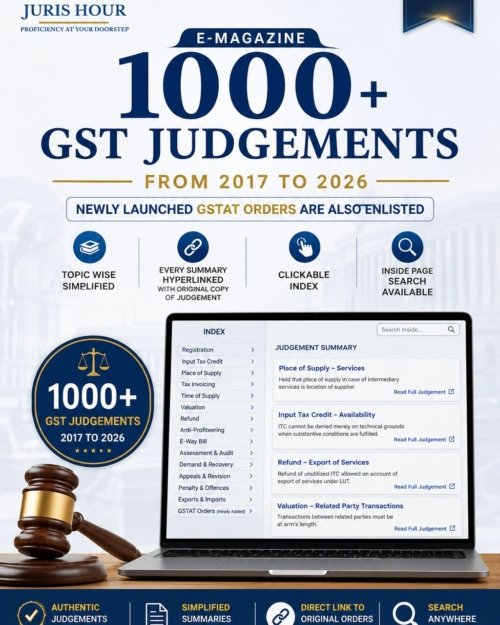
Save50.1%Save ₹500.00Only₹499.00 Original price was: ₹999.00.₹499.00Current price is: ₹499.00. + GST📘 E-Magazine: 1000+ Landmark GST Judgments (2017–2026)
Save50%Save ₹2,500.00Only₹2,500.00 Original price was: ₹5,000.00.₹2,500.00Current price is: ₹2,500.00. + GST



Reviews
There are no reviews yet.